Top AI-Powered CRM Platforms Suitable for Indian Sales Teams (2026)
Your CRM is where AI either pays off or quietly dies. Pick the wrong one for how India actually sells, WhatsApp-first buyers, DPDP compliance, real price sensitivity, and no amount of AI features will save the rollout. Here is how we would choose in 2026.
Short answer: The AI-powered CRM platforms best suited for Indian sales teams in 2026 are Zoho CRM (with Zia AI), Freshsales (with Freddy AI), LeadSquared, Kylas CRM, HubSpot Sales Hub (with Breeze AI), Salesforce Sales Cloud (with Einstein and Agentforce), and Microsoft Dynamics 365 (with Copilot). Indian-built platforms, Zoho, Freshsales, LeadSquared and Kylas, dominate mid-market adoption because they combine INR-native pricing, deep WhatsApp Business API integration, Indian-language support, and DPDP Act readiness. Global platforms like Salesforce, HubSpot and Microsoft Dynamics remain the enterprise choice where global integrations and Einstein/Copilot AI depth outweigh cost. The single most important buying decision for Indian teams in 2026 is not the AI feature list, it is the DPDP Act 2023 compliance posture and WhatsApp workflow depth of the vendor.
Related reading: the best AI tools for sales team productivity, what India's DPDP Act means for your AI, and AI use cases for subscription businesses.
TL;DR
- The Indian AI CRM market is dominated by Indian-built platforms: Zoho, Freshsales (Freshworks), LeadSquared and Kylas together power the majority of mid-market Indian sales teams.
- WhatsApp is now the primary sales channel for most Indian B2B and D2C teams. Businesses with strong WhatsApp CRM integration report roughly 27% better response efficiency and 35% higher lead conversion.
- DPDP Act 2023 enforcement is live in 2026. Rules were notified in November 2025; the "soft enforcement" year runs through 2026, with hard enforcement expected from May 2027. Penalties reach ₹250 crore per violation.
- INR pricing sits in three tiers, budget (₹200-999/user/month), mid (₹1,000-2,000/user/month), and premium (₹2,000+/user/month), with flat-rate models like Kylas at ₹12,999/month for unlimited users changing the math for growing teams.
- Agentic CRM is the 2026 shift. Zia (Zoho), Freddy (Freshsales), Einstein/Agentforce (Salesforce), Breeze (HubSpot), and Copilot (Microsoft) now decide and act, not just draft, but adoption still depends on data quality and rep discipline, not the AI itself.
Why 2026 is a pivotal year for AI CRM adoption in India
Three shifts are hitting Indian sales teams at the same time, and they change how CRMs should be chosen.
Shift one: AI stopped being a feature and became the interface. In 2023, "AI in CRM" usually meant a lead score. In 2026 it means a copilot that drafts your follow-up, an agent that logs your call, an assistant that surfaces the deal at risk, and an autonomous workflow that runs a WhatsApp campaign end-to-end. Zia, Freddy, Einstein, Agentforce, Breeze and Copilot are no longer add-ons, they are the CRM.
Shift two: DPDP Act 2023 moved from statute to operational reality. The Digital Personal Data Protection Act received presidential assent in August 2023. The DPDP Rules, 2025 were notified by MeitY on November 13, 2025. 2026 is the "build and test" year; the Data Protection Board of India is operational; enforcement action against mid-sized app developers in fintech, edtech and gaming has already begun. From May 2027, hard enforcement applies. For CRMs, this means consent capture, data retention, breach notification (72 hours), and data-principal rights workflows are no longer optional features, they are procurement filters.
Shift three: WhatsApp is the primary sales channel. The channel mix that worked in 2020, cold call plus email plus LinkedIn, has been overtaken in India by WhatsApp-first workflows across insurance, real estate, edtech, D2C, financial services and SaaS. A CRM without a native WhatsApp Business API integration in 2026 is measurably slower. Teams with proper WhatsApp CRM integration report roughly 27% better response efficiency and 35% higher lead conversion rates.
The right CRM for an Indian sales team in 2026 is the one that lets you sell over WhatsApp, hits your DPDP consent and retention requirements, and gives you AI that actually saves rep time, at INR pricing that scales.
What's different about selling in India (and why it matters for your CRM choice)
Global CRM listicles assume a US or European buyer. Indian teams need to shortlist against a very different set of realities.
WhatsApp Business API depth. Not a Twilio connector, not a Zapier hack, native, two-way, template-message-approved, opt-in-managed WhatsApp workflows. This is now table stakes for Zoho, Freshsales, Kylas, LeadSquared, Groweon, TeleCRM and NeoDove. Global CRMs like HubSpot and Salesforce support WhatsApp through partners; the depth varies.
Indian language support. The DPDP Act explicitly requires consent notices in plain language, and reasonable practice includes at least one of the 22 official Indian languages plus English. Reps in Tier-2 and Tier-3 cities need Hindi, Tamil, Marathi, Bengali, Telugu, Kannada, Gujarati and Malayalam in the CRM interface and in customer-facing templates.
Field sales with intermittent connectivity. For real estate, insurance, EdTech, healthcare, automotive, and BFSI outside metros, offline mode, GPS check-ins, photo capture and low-bandwidth sync are not luxuries. LeadSquared, Groweon, and NeoDove were built around this. Salesforce Field Service works but is priced for enterprise.
GST, TDS and Indian payment workflows. Native integrations with Razorpay, PayU, Cashfree, PhonePe, UPI, plus Zoho Books / Tally / Zoho Invoice / QuickBooks India for invoicing. Global CRMs often need custom integrations here.
IndiaMart, Justdial and TradeIndia lead capture. For SMB and manufacturing sales teams, these three sources contribute a large share of inbound leads. Native connectors materially reduce lost leads. Zoho, Kylas, LeadSquared and TeleCRM lead here.
Team-scaling economics. A 5-person team growing to 50 in 18 months changes CRM economics dramatically. Per-user pricing (Zoho, Freshsales, Salesforce, HubSpot) rewards small teams and punishes fast-growing ones. Flat-rate pricing (Kylas at ₹12,999/month for unlimited users) rewards growing teams and penalises small ones.
Data residency. DPDP Act uses a negative-list model for cross-border transfers, data can leave India unless the government restricts a specific country. Practically, most large Indian enterprises still prefer India-region hosting for compliance simplicity. AWS Mumbai, Azure Central India, and GCP Mumbai/Delhi regions are the primary hosting geographies. Confirm your CRM vendor's data-residency options at the contract stage.
The best AI CRM is the one your reps actually use, on the channel your buyers actually reply to.
The 5 categories of AI CRM for Indian sales teams
Category first, brand second. Choose the shape of the tool before the vendor.
1. Indian-built, mid-market AI CRMs
Deep WhatsApp workflows, Indian-language interfaces, INR pricing, local support, DPDP-aware. Examples: Zoho CRM, Freshsales (Freshworks), Kylas CRM, LeadSquared. Best for: Indian B2B and D2C teams from 5 to 500 reps. This is where 70%+ of Indian sales teams should shortlist first.
2. Global enterprise AI CRMs
Global integrations, mature AI (Einstein, Copilot, Breeze), extensive AppExchange, higher cost, longer implementation. Examples: Salesforce Sales Cloud + Einstein/Agentforce, HubSpot Sales Hub + Breeze AI, Microsoft Dynamics 365 + Copilot for Sales. Best for: Fortune India 500, global GCCs based in India, and multinational sales teams needing global standardisation.
3. Vertical-specific AI CRMs
Purpose-built for a single industry with prebuilt workflows and compliance. Examples: LeadSquared (edtech, BFSI, healthcare, real estate), Sell.do (real estate), Kapture (retail and BFSI), TalkCharge / NestAway CRMs (specialised). Best for: Regulated verticals where a generic CRM would need heavy customisation.
4. Call-and-WhatsApp-first CRMs
Built around outbound calls, auto-dialer, and WhatsApp, where the CRM is really a productivity layer on top of the phone. Examples: TeleCRM, NeoDove, Groweon. Best for: Insurance, real estate, edtech and D2C teams where 80%+ of the workday is calls and WhatsApp.
5. Micro-business and starter CRMs
For teams graduating from spreadsheets, cheap, fast to onboard, limited but sufficient. Examples: Bigin by Zoho, Wortal CRM, Vtiger, HubSpot free tier. Best for: Teams of 1-15 reps, especially early-stage founders wanting structure without cost.
Comparison table: AI CRM platforms for Indian sales teams (2026)
| CRM | Category | AI engine | Native WhatsApp API | Indian-language UI | Starting price (INR) | Data residency (India) | Best for |
|---|---|---|---|---|---|---|---|
| Zoho CRM | Indian-built | Zia | Yes (native) | Yes (extensive) | ₹800/user/month | Yes (Zoho India DC) | Indian SMB and mid-market with existing Zoho stack |
| Bigin by Zoho | Micro-business | Zia lite | Yes | Yes | ₹400/user/month | Yes | 1-10 rep teams graduating from spreadsheets |
| Freshsales (Freshworks) | Indian-built | Freddy | Yes | Yes | ₹999/user/month | Yes (India region) | SaaS, B2B mid-market with clean pipeline focus |
| LeadSquared | Vertical-specific | LSQ AI | Yes | Yes | ₹2,500, ₹5,000/user/month | Yes | Edtech, BFSI, healthcare, real estate, insurance |
| Kylas CRM | Indian-built (flat-rate) | Kylas AI | Yes | Yes | ₹12,999/month flat (unlimited users) | Yes | Fast-growing Indian teams (5 → 50+ users) |
| HubSpot Sales Hub | Global enterprise | Breeze AI | Via partners | Limited | Free tier; paid from ~₹1,800/user/month | India region available | Marketing-led mid-market and Indian SaaS teams |
| Salesforce Sales Cloud | Global enterprise | Einstein + Agentforce | Via partners / WhatsApp Business Platform | Limited native | ~₹5,000+/user/month; enterprise custom | Yes (Hyderabad and Mumbai regions) | Fortune India 500, GCCs, enterprise global standardisation |
| Microsoft Dynamics 365 Sales | Global enterprise | Copilot for Sales | Via partners | Limited | ~₹5,600/user/month + M365 | Yes (Central India / South India) | Microsoft-stack enterprises, Dynamics + Teams workflows |
| Pipedrive | Global mid-market | Pipedrive AI | Via integrations | Limited | ~₹1,600/user/month | EU/US regions | Small B2B teams wanting pipeline discipline |
| TeleCRM | Call/WhatsApp-first | Limited | Yes | Yes | ~₹420/user/month | Yes | High-volume call and WhatsApp sales |
| NeoDove | Call/WhatsApp-first | Limited | Yes | Yes | ~₹500/user/month | Yes | Telecalling-first sales teams |
| Groweon | Indian-built | AION agentic AI | Yes | Yes | Custom / mid-market | Yes | WhatsApp-heavy mid-market with field sales |
| Vtiger CRM | Indian-built open-source | Calculus AI | Yes | Yes | ~₹1,000/user/month | Yes | Growing teams wanting features at fair price |
| Wortal CRM | Micro-business | Limited | Yes | Yes | ₹200/user/month | Yes | Micro-teams and Tier-2/3 SMBs |
Pricing is directional and refreshes frequently. Confirm at contract stage, most vendors discount 15-25% on annual terms.
The AI CRM platforms, unpacked, with what actually works for Indian teams
Zoho CRM with Zia AI, the default Indian mid-market pick
Zoho remains the most-deployed CRM in India, and Zia is now genuinely useful rather than a demo feature. Zia handles lead scoring, deal prediction, anomaly detection, workflow recommendations, sentiment analysis on emails, and, through the newer Zia Agent Studio, you can build custom agents for account research, follow-up drafting, and CRM data hygiene. Native WhatsApp Business API integration and deep Indian-language support make it hard to beat inside India.
Strengths: Chennai-headquartered, Indian data centres, Zoho One bundling that covers CRM, Books, Desk, Campaigns and 40+ apps at aggressive economics. Zia works. WhatsApp is native. GST-ready. Great for Tier-2 and Tier-3 city teams.
Watch for: Zoho One's breadth is a double-edged sword, new admins often spend two to three weeks figuring out which of the seven Zoho apps they actually need. The UI can feel dated in places. Reports and dashboards need setup effort.
Pricing: From ₹800/user/month (Standard), ₹1,400 (Professional), ₹2,300 (Enterprise), ₹2,500 (Ultimate). Zoho One bundle from ~₹1,500/user/month across the full suite.
Freshsales (Freshworks) with Freddy AI, the cleanest Indian mid-market UI
Freshsales is the pick when adoption is your risk. It has the cleanest, most intuitive UI in the Indian-built category, a big deal for teams that have failed a prior CRM rollout. Freddy AI handles lead scoring, deal insights, next-best-action, and reply suggestions. Chennai-headquartered Freshworks (NASDAQ: FRSH) understands local payment workflows and support expectations. The tight integration with Freshchat and Freshdesk is especially strong for SaaS teams where the same accounts move between sales, onboarding and support.
Strengths: Adoption-friendly UI, Indian support hours, native WhatsApp, mature Freddy AI, unified stack with Freshchat/Freshdesk/Freshmarketer.
Watch for: Deep customisation isn't Freshsales' strong suit. Freddy AI is scoring-first, it does not do call transcription and conversation intelligence natively. Complex sales processes with many edge cases can hit ceiling early.
Pricing: From ₹999/user/month (Growth), ₹2,799 (Pro), ₹4,999 (Enterprise).
LeadSquared, the pick for regulated Indian verticals
LeadSquared has become the default CRM for four Indian verticals: edtech (Byju's-era operators), BFSI (insurance and NBFC), healthcare, and real estate. It was built around a specific insight, Indian sales in these verticals is high-velocity, lead-heavy, and often mobile-first with field reps. GPS tracking, check-ins, photo capture, and offline access work reliably even in low-connectivity areas. Industry-specific templates cut implementation time by weeks.
Strengths: Best-in-class field sales automation for India. Deep vertical templates. Reliable offline mode. Local compliance awareness. LSQ AI adds lead scoring and next-best-action, and the platform integrates naturally with WhatsApp Business.
Watch for: UI is not as polished as premium global competitors. Outside its core verticals, LeadSquared can feel over-engineered, "driving a tractor through a parking lot," as one 2026 review put it.
Pricing: Custom, typically ₹2,500, ₹5,000/user/month depending on module and scale. Not cheap, but the vertical fit is the point.
Kylas CRM, the flat-rate pick for fast-growing Indian teams
Kylas made a strategic bet that per-user pricing punishes growing Indian teams, and won. At ₹12,999/month flat for unlimited users, a team growing from 10 to 40 to 80 reps pays the same monthly bill. The math flips completely against per-user competitors somewhere between 15 and 25 users.
Strengths: Predictable, flat cost. Unlimited users at one price. Pune-built, India-focused support. Quick implementation. Interface simpler than Zoho, easier for reps to adopt. WhatsApp integration and standard pipeline automation are all included.
Watch for: Fewer advanced features than Zoho or Salesforce. AI capabilities are competent but less sophisticated than Zia or Einstein. Integration ecosystem is smaller. Reports aren't as presentable as competitors.
Pricing: ₹12,999/month flat for unlimited users, sales-focused. Enterprise and marketing modules are separately priced.
HubSpot Sales Hub with Breeze AI, the marketing-plus-sales pick
HubSpot's Indian traction has grown steadily because the free tier is genuinely useful and Breeze AI is now native across the CRM. Breeze handles content generation, meeting summaries, prospect research, and, in 2026, Breeze Copilot for conversational CRM interaction. For Indian SaaS and B2B mid-market teams where sales and marketing must work from the same system, this is the default global-brand pick.
Strengths: Best-in-class free tier. Marketing and sales unified. Breeze AI is deeply integrated. Global brand, healthy Indian ecosystem of partners.
Watch for: Paid plans get expensive fast once you cross 5,000 contacts on the marketing side. Native WhatsApp workflow depth is less than Zoho or Freshsales; most teams use a partner integration. Model your Year 2 cost carefully, surprise bills at month nine are common.
Pricing: Free tier; Sales Hub Starter from ~₹1,800/user/month; Professional ~₹8,000/user/month; Enterprise custom.
Salesforce Sales Cloud with Einstein and Agentforce, the enterprise standard
For Fortune India 500 companies, GCCs, and multinational sales teams, Salesforce remains the enterprise standard. Einstein handles predictive lead and opportunity scoring, forecasting and next-best-action. Agentforce, launched in 2024 and matured through 2025-2026, lets you build agents that live inside Salesforce workflows, with free agent credits for existing Salesforce customers making the effective cost lower than the headline rate.
Strengths: Almost unlimited depth. AppExchange ecosystem. Forecasting, territory management, revenue intelligence are all first-class. Data residency in Hyderabad and Mumbai regions. Enterprise support and audit posture that pass procurement.
Watch for: Highest total cost of ownership on this list. Implementation runs to weeks or months. Native WhatsApp requires WhatsApp Business Platform integration, and workflow depth depends heavily on your partner. Indian mid-market often over-buys Salesforce and under-uses it, evaluate honestly.
Pricing: From ~₹5,000+/user/month (Starter); Professional and Enterprise are custom-priced, typically low-to-mid five figures per user per year at enterprise scale.
Microsoft Dynamics 365 Sales with Copilot for Sales, the Microsoft-stack pick
For Indian enterprises standardised on Microsoft 365 and Teams, Copilot for Sales is the least-disruptive AI deployment on this list. It surfaces CRM context inside Outlook, drafts follow-ups from meeting transcripts in Teams, and pushes updates back to Dynamics, meeting reps where they already work.
Strengths: Native inside Outlook and Teams, where Indian enterprise reps spend most of their day. Copilot for Sales meeting summaries and CRM update automation genuinely save 15-20 minutes per meeting. Data residency in Central India and South India Azure regions.
Watch for: Total stack cost adds up quickly (Dynamics licence + M365 + Copilot for Sales). Native WhatsApp still routes through partner integrations. Best when the organisation is already deep in Microsoft, not a first CRM for a standalone Indian SMB.
Pricing: Dynamics 365 Sales Professional from ~₹5,600/user/month; Enterprise higher; Copilot for Sales ~₹4,000/user/month on top of Dynamics or Salesforce.
The call-and-WhatsApp-first tier: TeleCRM, NeoDove, Groweon
For teams where 70-80% of the workday is calls and WhatsApp, insurance, real estate, edtech, D2C, financial services, these platforms are lean, cheap, and workflow-shaped for exactly that motion. Auto-dialer, lead distribution, call recording, WhatsApp templates, and simple pipelines. TeleCRM and NeoDove both sit around ₹420, ₹500/user/month; Groweon adds AION, an agentic AI engine, at mid-market pricing. These are not "sophisticated" AI CRMs, but for the right motion they beat every option above on rep productivity per rupee.
The micro-business tier: Bigin, Wortal, Vtiger, HubSpot free
For teams graduating from spreadsheets. Bigin by Zoho at ₹400/user/month is a joy for first-time CRM users. Wortal at ₹200/user/month is the cheapest starting point that still covers WhatsApp and call integration. HubSpot's free tier holds up until you cross real volume. Vtiger's open-source roots give you more depth than the price suggests. None of these is where you land at scale, but they're often where you should start.
DPDP Act 2023: the compliance filter every Indian CRM buyer must apply in 2026
Most CRM buying committees in India skip this section. In 2026, that mistake gets expensive.
Where we are on the timeline. The DPDP Act received presidential assent on August 11, 2023. The DPDP Rules, 2025 were notified on November 13, 2025. Rules 1, 2, and 17-21 took effect immediately, establishing the Data Protection Board's structure. Rule 4 (Consent Manager registration and operations) activates around November 2026. Full "hard enforcement" is widely expected by May 13, 2027, when the Data Protection Board of India can impose penalties up to ₹250 crore per violation.
What your CRM must support to help you comply.
- Purpose-specific consent capture, not a one-time checkbox. The CRM must let you capture, store, and audit consent per purpose (sales outreach, marketing, analytics), timestamped, with the exact notice text version.
- Consent withdrawal workflows, a data principal must be able to withdraw consent, and your CRM must reflect that immediately across sequences, WhatsApp templates, and automation.
- Data-principal rights fulfilment, access, correction, erasure, and grievance redressal workflows the CRM must either provide natively or make easy to implement.
- Retention control and deletion, automated deletion of personal data when no longer needed for the stated purpose. Manual "delete when someone asks" won't survive audit.
- 72-hour breach notification support, audit logs, access controls, and alerting that let you notify the Board and affected principals within 72 hours.
- Data residency options, most large Indian buyers now insist on India-region hosting. Zoho, Freshworks, Salesforce (Hyderabad/Mumbai), Microsoft (Central India/South India), and AWS/Azure/GCP India regions all support this.
- Children's data controls, the DPDP Act defines a child as anyone under 18, prohibits targeted advertising and behavioural monitoring, and requires verifiable parental consent. If your business has any chance of processing minor data (edtech especially), the CRM's consent architecture must handle this.
- Processor agreements (DPAs), you'll need a DPA with your CRM vendor. Confirm the vendor has a DPDP-aligned template, not just a GDPR one.
How the platforms compare. Indian-built platforms (Zoho, Freshsales, LeadSquared, Kylas) have been building DPDP-aware features throughout 2025-2026 and have the natural home advantage. Global platforms (Salesforce, HubSpot, Microsoft) have mature GDPR frameworks that map partially to DPDP but require configuration and often a compliance partner. Confirm on paper, never assume, that consent, retention, breach notification, and data-residency requirements are met before signing.
The negative-list model for cross-border transfers. Section 16 of the Act adopts a negative-list model: data can be transferred to any country unless the Central Government restricts it. As of mid-2026, no restricted list has been published, so all destinations remain permissible. But this can change without notice and without adequacy assessment. For risk-averse enterprises, India-region hosting is the safer default.
WhatsApp Business API depth: the second India-specific filter
Every CRM on this list claims WhatsApp integration. The depth varies dramatically. What to actually check:
- Native WhatsApp Business API vs. third-party connector. Native (Zoho, Freshsales, Kylas, LeadSquared, TeleCRM, NeoDove) is faster and cheaper to maintain. Third-party (Salesforce and HubSpot via WhatsApp Business Platform partners) adds cost and integration overhead.
- Template approval and management inside the CRM. Meta requires template pre-approval for business-initiated messages. The CRM should manage templates natively, not push you to a separate console.
- Two-way conversation with rep hand-off. A prospect replies, the CRM routes to the right rep, and the conversation lives inside the CRM record. This is the workflow that matters daily.
- Opt-in and opt-out audit trail. DPDP requires this, and WhatsApp's own policies require it. Confirm the CRM captures the opt-in source, timestamp, and version of the notice.
- Automated sequences with conditional logic. Send message A, wait 24 hours; if reply, hand to rep; if no reply, send message B in Hindi. The CRM's automation depth here directly drives conversion.
- WhatsApp broadcast and campaign spend visibility. WhatsApp Business API is priced per conversation. The CRM should let you see spend, template performance, and delivery rates alongside the sales data.
Groweon's own analysis of 2026 Indian CRM adoption found teams with strong native WhatsApp integration hit 27% better response efficiency and 35% higher lead conversion versus teams using bolted-on connectors. That's a bigger delta than most AI features deliver.
Vertical-specific picks for Indian sales teams
Because vertical fit often beats feature depth.
- Real estate: LeadSquared, Sell.do, Salesforce Real Estate Cloud, Groweon Real Estate CRM. LeadSquared and Sell.do dominate.
- BFSI (Banks, NBFCs, Insurance): LeadSquared, Salesforce Financial Services Cloud, Kapture. LeadSquared for high-volume lead motion; Salesforce for large regulated institutions.
- EdTech and coaching institutes: LeadSquared, Zoho CRM Plus, Freshsales. LeadSquared is the incumbent leader.
- Healthcare and diagnostics: LeadSquared, Salesforce Health Cloud, Zoho.
- D2C and e-commerce: Zoho CRM Plus, Freshsales, Kylas, Shopify + HubSpot for marketing-led motions.
- B2B SaaS: Freshsales, HubSpot, Salesforce (as ACVs scale), Pipedrive for smaller teams.
- Manufacturing and distribution: Zoho CRM with Zoho Inventory, Salesforce Manufacturing Cloud, SAP CRM for enterprise.
- Automotive dealerships: Groweon Automobile CRM, LeadSquared, Salesforce Automotive Cloud, AUTOSherpa.
- Field sales in Tier-2 / Tier-3: LeadSquared, Groweon, NeoDove. Offline mode and GPS are non-negotiable.
The 5-tool AI CRM stack we recommend for most Indian mid-market teams (2026)
After watching many rollouts succeed and fail across Indian mid-market, this is the leanest stack that produces measurable productivity in one quarter:
- Primary CRM with native AI, Zoho CRM (Zia) or Freshsales (Freddy) for most SMB and mid-market; LeadSquared for regulated verticals; Kylas for fast-growing teams; Salesforce Einstein/Agentforce for enterprise.
- WhatsApp Business API, native inside the CRM, not bolted on. If bolted on, budget for a specialist partner.
- Conversation intelligence, CallRail, Ozonetel, MyOperator, or a Freshworks Freddy AI + Freshcaller combination for calls.
- DPDP consent and cookie management, a compliance tool (Sprinto, Vanta, miniOrange, Concentric AI) that ties into your CRM's consent capture.
- Analytics and forecasting, Zoho Analytics, Freshworks Analytics, Salesforce Tableau, or Microsoft Power BI depending on stack.
Add an agentic AI layer (Zia Agents, Salesforce Agentforce, or a custom-built agent) only after the five above are running cleanly. Agentic workflows fed by bad data amplify bad outcomes.

How to choose: a 7-question decision framework for Indian teams
Before evaluating any vendor, answer these seven questions on paper. If you can't answer them, no CRM will fix your productivity problem.
- What is your team size today, and in 12 months? Small and stable → per-user (Zoho, Freshsales, HubSpot). Growing fast → flat-rate (Kylas) or bundled (Zoho One).
- What is your primary sales channel? WhatsApp-heavy → Zoho, Freshsales, Kylas, TeleCRM, NeoDove. Email-heavy → HubSpot. Field-heavy → LeadSquared, Groweon. Call-heavy → TeleCRM, NeoDove.
- What is your vertical? Regulated (BFSI, edtech, healthcare, real estate) → LeadSquared. B2B SaaS → Freshsales / HubSpot. D2C → Zoho / Kylas. Enterprise multinational → Salesforce / Dynamics.
- What is your implementation urgency? Need it this month → Kylas, Bigin, HubSpot free, Wortal. Can wait a quarter → Zoho, Freshsales. Can wait longer → Salesforce, Dynamics.
- What is your technical resource depth? No developers → Kylas, Bigin, Freshsales. Some technical capacity → Zoho, HubSpot. Full RevOps or IT team → Salesforce, Dynamics.
- What is your DPDP Act posture? Serving Indian residents → any CRM with DPDP-aligned consent, retention, breach notification, and India-region hosting must be a hard requirement, not a nice-to-have. Confirm on paper.
- What is your true 12-month cost? Add data enrichment (IndiaMart / Justdial / ZoomInfo tier), WhatsApp Business API messaging costs (₹0.35, ₹0.80 per conversation depending on category), implementation and training, and DPDP compliance tooling. Sticker price is 40-60% of true Year 1 cost for most Indian teams.
Implementation roadmap for Indian sales teams: 30 / 60 / 90 days
Days 1-30, baseline and shortlist.
- Instrument current selling time and channel mix (how much of the day is WhatsApp, calls, email, admin?).
- Audit current data hygiene on a 200-record sample.
- Confirm DPDP Act consent and retention gaps with a compliance partner.
- Shortlist three CRMs matching the seven-question framework above. Book demos with your own pipeline data.
Days 31-60, pilot with one team, one motion.
- Deploy to 5-15 reps depending on team size. Do not roll out company-wide.
- Migrate a defined data slice, not the full CRM history, into the pilot.
- Set up WhatsApp Business API integration with pre-approved templates.
- Establish weekly review of adoption, WhatsApp response rates, and CRM completeness. Not vanity volume metrics.
Days 61-90, measure, tune, expand.
- Compare pipeline generated per rep-hour and cost per qualified lead versus baseline.
- Confirm DPDP consent capture and retention rules are actually running.
- Kill any workflow the pilot reps aren't using. Reps are the honest signal; usage data is the truth.
- Expand only when the pilot cohort measurably improved on selling-time ratio and pipeline conversion.
Most Indian teams see initial productivity gains, reduced admin time, faster WhatsApp follow-ups, cleaner CRM data, in 30-60 days. Measurable revenue impact typically appears in 3-4 months.
Metrics that actually indicate your AI CRM is working
Don't measure your CRM on vendor-reported metrics. Measure it on these:
- Selling-time ratio. Percentage of rep day spent in customer conversations. Target: move from ~28% baseline to 40%+ within two quarters.
- WhatsApp response and conversion rates. Response efficiency should improve by 20%+ within a quarter of proper native WhatsApp integration.
- Cost per qualified lead. Target: 30-50% reduction versus baseline for the same lead source.
- CRM data completeness. Should climb consistently as native AI copilots automate updates. If not climbing, the tool is being ignored.
- Ramp time for new reps. Should compress by 25-40% when a good CRM plus conversation intelligence is deployed alongside coaching.
- DPDP consent capture rate. Every new lead should have purpose-specific consent recorded. Anything under 95% is a compliance risk waiting to be found.
- Forecast accuracy variance. Should stabilise within 5-10% of actual within two quarters of stable CRM use.
If none of these metrics move in six months, the tool is not the problem, the deployment is.
Frequently asked questions
Which is the best AI-powered CRM for Indian sales teams in 2026?
The best AI CRM for an Indian sales team in 2026 depends on team size, vertical, and channel mix. Zoho CRM with Zia is the most-deployed mid-market pick. Freshsales with Freddy AI wins on adoption-friendly UI. LeadSquared dominates edtech, BFSI, healthcare, and real estate. Kylas at ₹12,999/month flat is the best economics for fast-growing teams. Salesforce with Einstein and Agentforce is the enterprise standard for Fortune India 500 and GCCs. For most Indian mid-market B2B and D2C teams, Zoho or Freshsales is the right shortlist starting point.
What makes a CRM suitable for Indian sales teams specifically?
Six India-specific factors: (1) native WhatsApp Business API integration, (2) Indian-language interface and template support, (3) DPDP Act 2023 consent, retention and breach notification workflows, (4) India-region data hosting, (5) INR pricing that fits Indian sales team economics, and (6) native connectors for IndiaMart, Justdial, TradeIndia, Razorpay, PayU, Cashfree, PhonePe and UPI. Generic global CRMs that check only one or two of these boxes will underperform Indian-built alternatives inside India.
Is Zoho CRM better than Salesforce for Indian businesses?
For most Indian SMB and mid-market businesses, yes. Zoho is 3-8x cheaper, has native WhatsApp and Indian-language support, comes with India data residency, and integrates naturally with Zoho Books, Zoho Desk, and Zoho Campaigns. Salesforce becomes the better answer at enterprise scale, Fortune India 500, GCCs, multinational sales teams, and organisations that need global standardisation, Einstein Agentforce depth, and the AppExchange ecosystem. Below ~200 users, most Indian teams over-buy Salesforce and under-use it.
Does DPDP Act 2023 require Indian companies to host CRM data in India?
No, not strictly. The DPDP Act uses a "negative-list" model for cross-border transfers, data can be transferred to any country unless the Central Government restricts a specific jurisdiction. As of mid-2026, no restricted list has been published. However, most large Indian enterprises now prefer India-region hosting for procurement simplicity and to reduce cross-border risk. Confirm with your CRM vendor whether they offer AWS Mumbai, Azure Central India, or GCP Mumbai/Delhi hosting. Zoho, Freshworks, Salesforce (Hyderabad/Mumbai), and Microsoft Dynamics (Central India/South India) all offer Indian region hosting.
How much does an AI CRM cost for an Indian sales team?
Budget tier: ₹200, ₹999 per user per month (Wortal, Bigin, TeleCRM, NeoDove, Zoho, Vtiger). Mid tier: ₹1,000, ₹2,000 per user per month (Freshsales, Pipedrive, HubSpot Starter). Premium tier: ₹2,000+ per user per month (LeadSquared, Salesforce, HubSpot Professional and Enterprise). Flat-rate: Kylas at ₹12,999 per month for unlimited users. For a 20-person Indian sales team, expect Year 1 all-in cost of ₹2.5, ₹8 lakh at the budget end, ₹8, ₹25 lakh at mid-tier, and ₹25 lakh, ₹1.5 crore+ at enterprise Salesforce scale, inclusive of licences, implementation, data, WhatsApp messaging, and DPDP compliance tooling.
Which Indian CRM has the best WhatsApp integration?
For native WhatsApp Business API depth inside the CRM, Zoho CRM, Freshsales, Kylas, LeadSquared, Groweon, TeleCRM and NeoDove are the strongest. They handle template pre-approval, two-way conversations, opt-in/opt-out audit trails, automated sequences, rep hand-off, and campaign spend visibility natively. Global CRMs like HubSpot and Salesforce support WhatsApp through the WhatsApp Business Platform via partners, capable but adds integration cost and complexity. Teams with strong native WhatsApp CRM integration report roughly 27% better response efficiency and 35% higher lead conversion.
What is the best CRM for small Indian businesses on a tight budget?
For teams under 15 reps with tight budgets: Bigin by Zoho (₹400/user/month), Wortal CRM (₹200/user/month), HubSpot free tier, Vtiger (~₹1,000/user/month), or Zoho CRM Standard (₹800/user/month). All include WhatsApp integration and cover the core lead-to-close pipeline. Bigin and HubSpot free are the fastest to set up, a five-person team can onboard in a single afternoon.
What is the best CRM for enterprise Indian sales teams?
For 200+ user enterprises and multinational sales teams: Salesforce Sales Cloud with Einstein and Agentforce is the default enterprise standard. Microsoft Dynamics 365 Sales with Copilot for Sales is the pick for Microsoft-standardised organisations. LeadSquared Enterprise is the choice for large regulated verticals, BFSI, edtech, healthcare. All three offer India-region hosting, DPDP Act support, and enterprise-grade audit posture.
How is AI changing CRM for Indian sales teams in 2026?
Three ways. First, AI moved from feature to interface, Zia, Freddy, Einstein, Copilot and Breeze are now the primary way reps interact with the CRM, not a side panel. Second, agentic AI (Zia Agent Studio, Salesforce Agentforce, Groweon AION) can autonomously handle research, drafting, follow-up sequencing and CRM data hygiene, not just suggest. Third, AI is compressing rep admin time by 30-40%, freeing selling time in a market where reps historically spend only 28% of their day actually selling. The teams that see the biggest gains combine AI CRM with clean data, DPDP-compliant consent capture, and a WhatsApp-first workflow.
What is the DPDP Act 2023 and how does it affect my CRM choice?
The Digital Personal Data Protection Act, 2023 is India's comprehensive privacy law. It applies to any organisation processing personal data of individuals in India, regardless of where the organisation is headquartered. Penalties reach ₹250 crore per violation. Rules were notified on November 13, 2025; 2026 is the "soft enforcement" year; hard enforcement is expected from May 2027. Your CRM must support purpose-specific consent capture, consent withdrawal workflows, data-principal rights fulfilment (access, correction, erasure), 72-hour breach notification, automated retention and deletion, children's data controls (anyone under 18), and preferably India-region data residency. Indian-built CRMs, Zoho, Freshsales, LeadSquared, Kylas, have been building DPDP-aware features throughout 2025-2026 and are ahead of most global platforms in DPDP-specific readiness.
The takeaway
Choosing an AI CRM for an Indian sales team in 2026 is not primarily an AI question. It is a WhatsApp question, a DPDP question, a channel-mix question, a vertical question, and an INR-economics question. The AI matters, Zia, Freddy, Einstein and Copilot each save real rep time, but the wrong category choice under a shiny AI brand still fails.
Start with the seven-question framework. Confirm the DPDP posture on paper. Pilot with one team and your own data. Measure selling-time ratio, WhatsApp response rate, and pipeline generated per rep-hour, not vanity volume. Add agentic AI only after the fundamentals are running cleanly.
The best AI CRM for your Indian sales team is the one your reps use every day for six months without being asked to. Everything else is spend without productivity.
AI only pays off when it is wired into how your team actually sells, not just switched on. That is the work we do. See how we work, read why most AI pilots stall, or book a free AI teardown.
Author
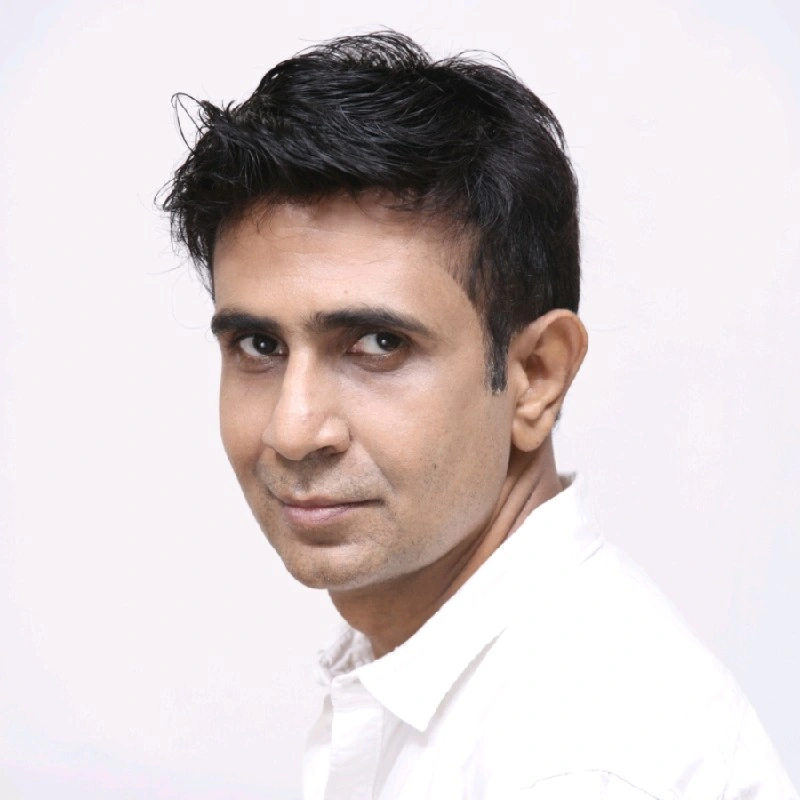
Written by Gaurav Bhushan Sharma. Senior growth executive and founder with 19+ years across Indian unicorns including Paytm, Pine Labs, TBO.COM and Wheelseye. IIM-Ahmedabad PGDM and ex-Microsoft Software Design Engineer. Advises Indian mid-market and GCC companies on AI transformation strategy, sales technology deployment, and DPDP Act-ready growth architectures.
Gaurav Bhushan Sharma on LinkedIn ↗Want this for your team?
Book a free 30-minute AI opportunity assessment. You'll leave with at least one concrete idea.
Book a call →Discussion
Comments are coming soon.